
Uncategorized
Rabby Browser Wallet: Why “More Secure” Is Not the Same as “Risk-Free”
A common misconception among DeFi power users is that a wallet branded around security automatically eliminates the need for operational discipline. In practice, wallets are risk-management tools, not safety guarantees. Rabby—an open-source, DeBank-built, multi-chain browser extension—adds concrete technical defenses that reduce several common attack vectors, but it also leaves gaps that professional users must manage consciously.
This explainer examines how Rabby’s browser extension (including the Chrome-family builds) works at the mechanism level, what security trade-offs it makes, where it materially improves safety for DeFi workflows, and where its design still requires complementary controls. The goal: give a sharper mental model you can use immediately when comparing Rabby to MetaMask, Trust Wallet, or institutional setups that layer on multi-sig services.
How Rabby’s security stack works (mechanisms, not marketing)
At core, Rabby is a non-custodial EVM-compatible wallet with an emphasis on pre-transaction safety and multi-chain convenience. Mechanically, it layers several defenses before a signature is emitted:
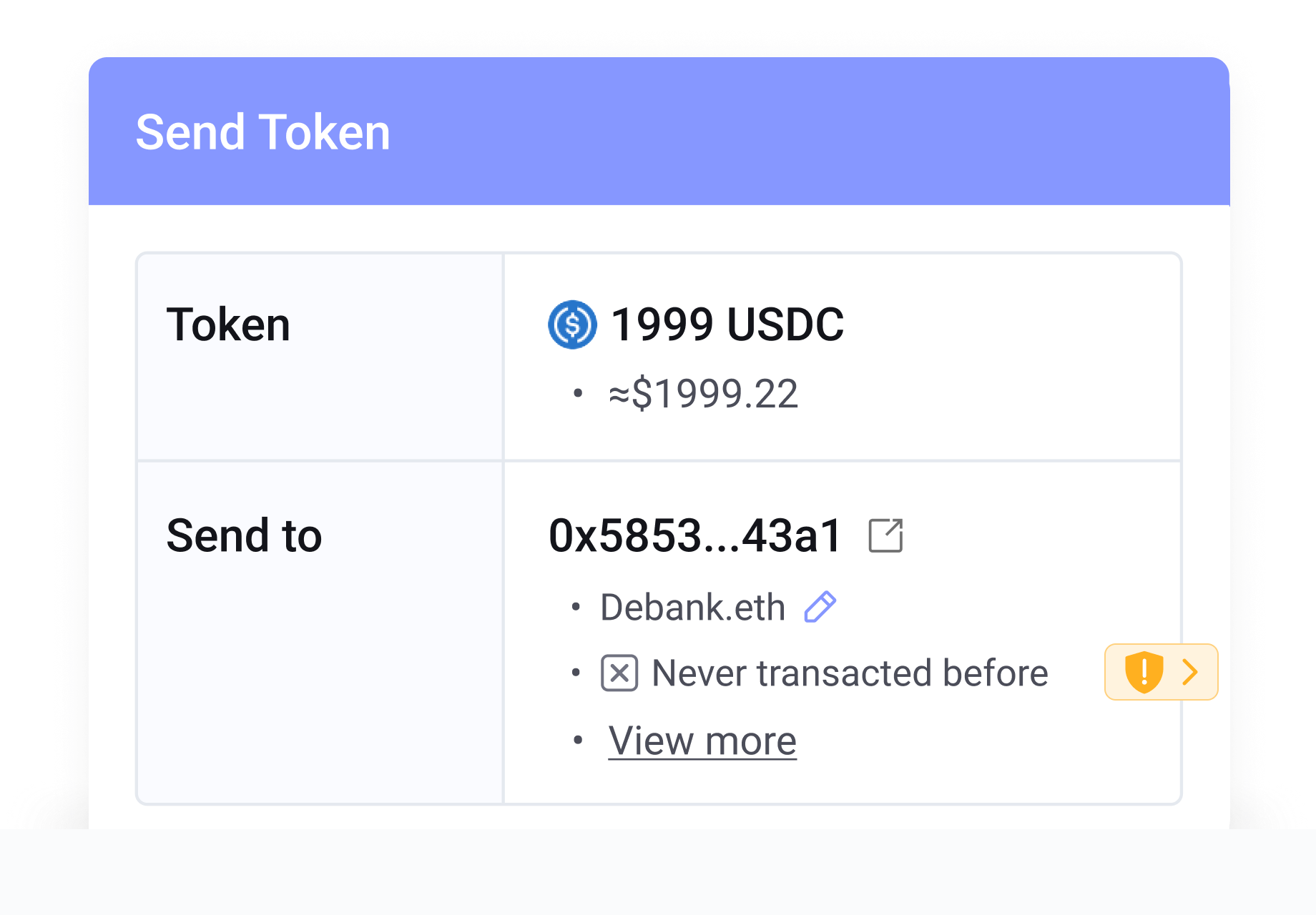
– Transaction simulation: before you sign, Rabby simulates the transaction locally and displays estimated token balance changes and fee costs. This directly addresses “blind signing,” a class of attacks where a malicious dApp tricks a user into signing a transaction whose effects are opaque.
– Pre-transaction risk scanning: a security engine checks addresses, known-bad contracts, and suspicious approval patterns. The engine raises alerts when it detects contracts previously associated with exploits or when a dApp requests unlimited token approvals.
– Approval revocation tooling: Rabby lets users view and cancel active token allowances granted to smart contracts, which shrinks the window where a compromised contract can drain funds.
– Automatic network switching: the extension detects which EVM chain a dApp expects and switches networks automatically, reducing user error when interacting across dozens of chains.
Where Rabby meaningfully changes the risk calculus
For power users who routinely sign complex interactions across many chains, Rabby’s simulation and risk-scanning provide two practical benefits: fewer cognitive errors and faster detection of malicious intent. Simulations translate a transaction’s low-level calldata into a visible delta on your token balances; that makes it harder for attackers to rely on user confusion. Approval revocation reduces long-tail exposure from approvals granted months ago.
Rabby’s compatibility with hardware wallets and integrations with institutional tools (Gnosis Safe, Fireblocks, Amber, Cobo) means you can combine these UX-level protections with stronger custody models. For example, using Rabby as an interface for a Gnosis Safe keeps multi-sig protections while benefiting from pre-sign simulation—useful for treasury teams that still need efficient dApp interactions.
Trade-offs and real limits you must accept
No client-side simulation can claim perfect foreknowledge. Simulations estimate effects given current on-chain state and gas price, but they cannot predict state changes that occur between simulation and finalization (front-running, reorgs, or MEV-driven sandwich attacks). In other words: simulation reduces informational asymmetry but does not eliminate atomic-execution risks.
Rabby is open-source under MIT, which improves transparency and enables audits—but open code is not a substitute for continual, independent security testing. The project did experience an exploit in 2022 related to a Rabby Swap contract (~$190k loss); the team froze the contract and compensated users. That incident is illustrative: design and operational errors live not only in the wallet extension but also in ancillary contracts and integrations users interact with. Rabby’s extension can warn you about a risky contract, but it cannot hard-reverse a signed transaction on-chain.
Other practical limits: Rabby currently lacks a native fiat on-ramp and built-in staking features. If your operational model depends on in-wallet fiat purchases or integrated staking flows, you’ll need external services or workflows. Also, while automatic network switching reduces human error, it introduces a different class of UI risk: users may rely on the extension to always pick the right chain and pay less attention to the destination network when it matters.
Decision framework: When to pick Rabby as your daily driver
Here is a compact heuristic for US-based DeFi practitioners choosing a browser extension wallet:
– If you regularly interact with multiple EVM chains and complex DeFi primitives, Rabby’s simulation and approval management materially reduce cognitive load and exposure.
– If your process requires institutional custody or multisig controls, use Rabby as an interface layered above Gnosis Safe or enterprise custody—this combines better UX with stronger governance.
– If you rely on on-ramp simplicity (buying crypto with USD) or want one-click in-wallet staking, Rabby alone is incomplete; pair it with a regulated exchange or a staking provider you trust.
Operational checklist for power users
Adopt these practices to get practical security gains from Rabby:
1) Always review the simulation delta before signing. Treat the simulation as a sanity-check, not a guarantee. Look specifically at net token movement and the recipient address shown.
2) Revoke unnecessary approvals quarterly. Even with Rabby’s revocation tool, set a cadence to clear allowances granted to one-off dApps.
3) Use hardware wallets for high-value holdings. Rabby’s hardware integrations mean you can keep private keys offline while enjoying simulation and scanning in the browser.
4) Combine Rabby with multisig for treasury operations. Single-signer custody does not scale for institutional risk limits.
5) Monitor contracts you interact with outside the extension: audits, explorer history, and community reports remain indispensable complements to automated scanning.
What to watch next (signals, not prophecies)
Three conditional developments would materially change Rabby’s utility profile for US users:
– Built-in fiat on-ramps: if Rabby integrates regulated fiat rails, it could become a more self-contained consumer product—watch for partnerships with licensed providers.
– Native staking features: adding secure, audited staking flows would expand its role for long-term asset management.
– Expanded institutional tooling: tighter integrations with custody providers and compliance features would make Rabby a more common interface for corporate DeFi activity.
Each of these would reduce reliance on third-party services but also increase the wallet’s attack surface; any expansion should be evaluated by the depth of audits and governance controls added alongside new features.
For a practical starting point—installation, supported networks, and a walkthrough of the extension interface—see this resource on the rabby wallet page.
FAQ
Does Rabby prevent all phishing and malicious dApp behavior?
No. Rabby reduces certain classes of risk—blind signing, dangerous approvals, and obvious interactions with known-bad contracts—through simulation and a risk engine. But sophisticated phishing, front-running, or off-chain social-engineering attacks are outside the scope of client-side protections. Operational controls (hardware wallets, multisig, cautious UX habits) remain necessary.
Can I use Rabby with a hardware wallet like Ledger?
Yes. Rabby supports major hardware wallets (Ledger, Trezor, Keystone, and others). Combining Rabby’s simulation and scanning with a hardware signer gives a strong balance between convenience and key security, but you should still verify critical transaction details on the hardware device itself when available.
What happened in the 2022 Rabby Swap incident, and should I worry?
The 2022 incident involved an exploited smart contract associated with Rabby Swap that led to losses. The team froze the contract and compensated users. The episode underlines two lessons: first, wallet-level protections cannot immunize you from insecure smart contracts; second, responsiveness and remediation matter. Use Rabby’s pre-transaction checks to avoid interacting with suspicious contracts, and maintain a broader due-diligence workflow.
Is Rabby better than MetaMask for advanced DeFi users?
“Better” depends on your priorities. Compared to MetaMask, Rabby’s transaction simulation, approval revocation tooling, and automatic network switching are meaningful UX and security improvements for active DeFi traders. MetaMask has broader brand adoption and integrations, while Rabby’s value accrues to users who prioritize pre-sign visibility and multi-chain workflows. Consider using both (Rabby’s Flip toggle makes this smoother) or layering Rabby over institutional custody for high-value operations.
